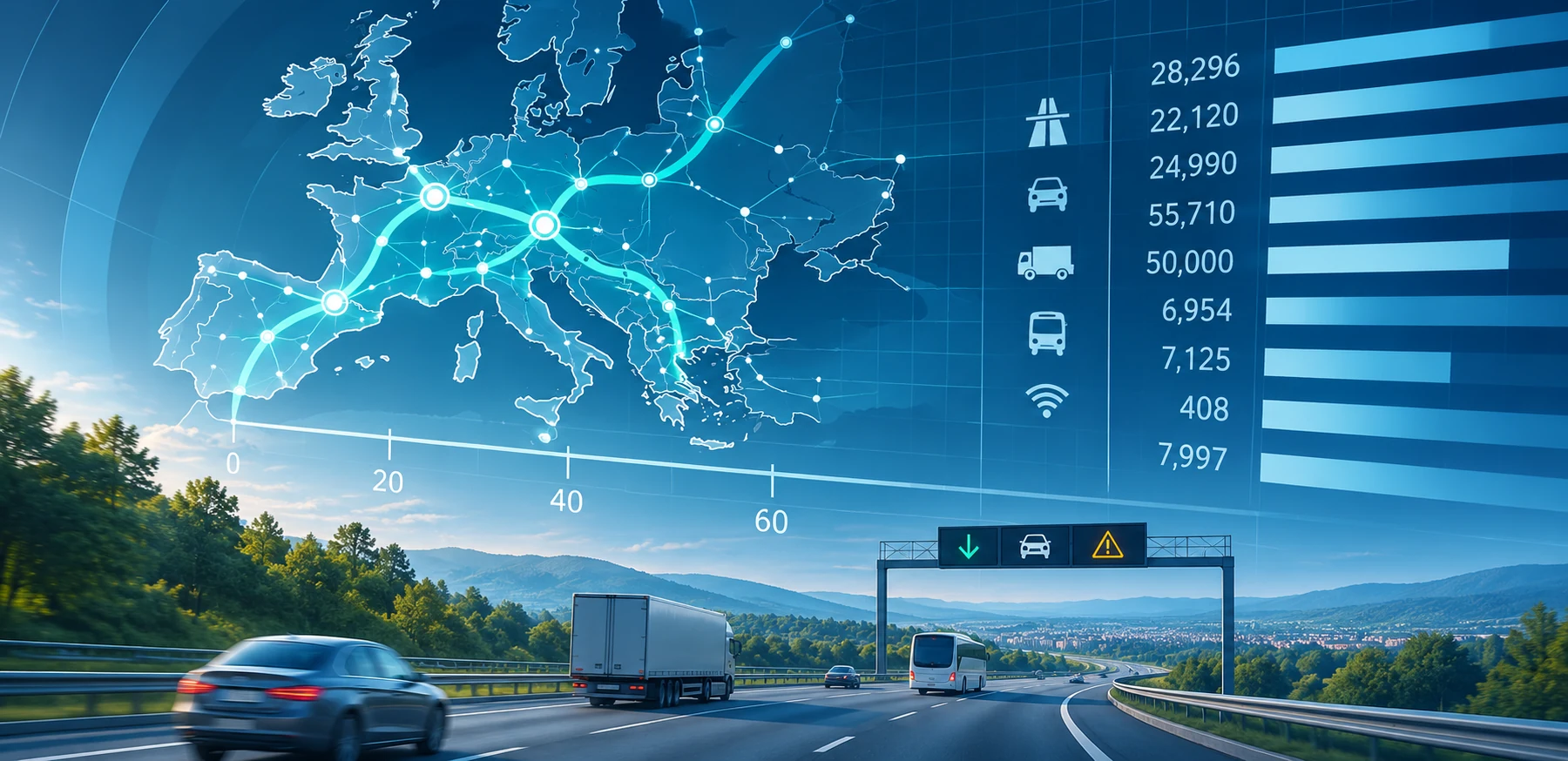
A road journey may cross several regions or countries, but a driver experiences it as one continuous trip. Real-time traffic information helps bridge that gap by translating changes on the road into warnings, route choices and practical travel guidance.
From roadside conditions to useful information
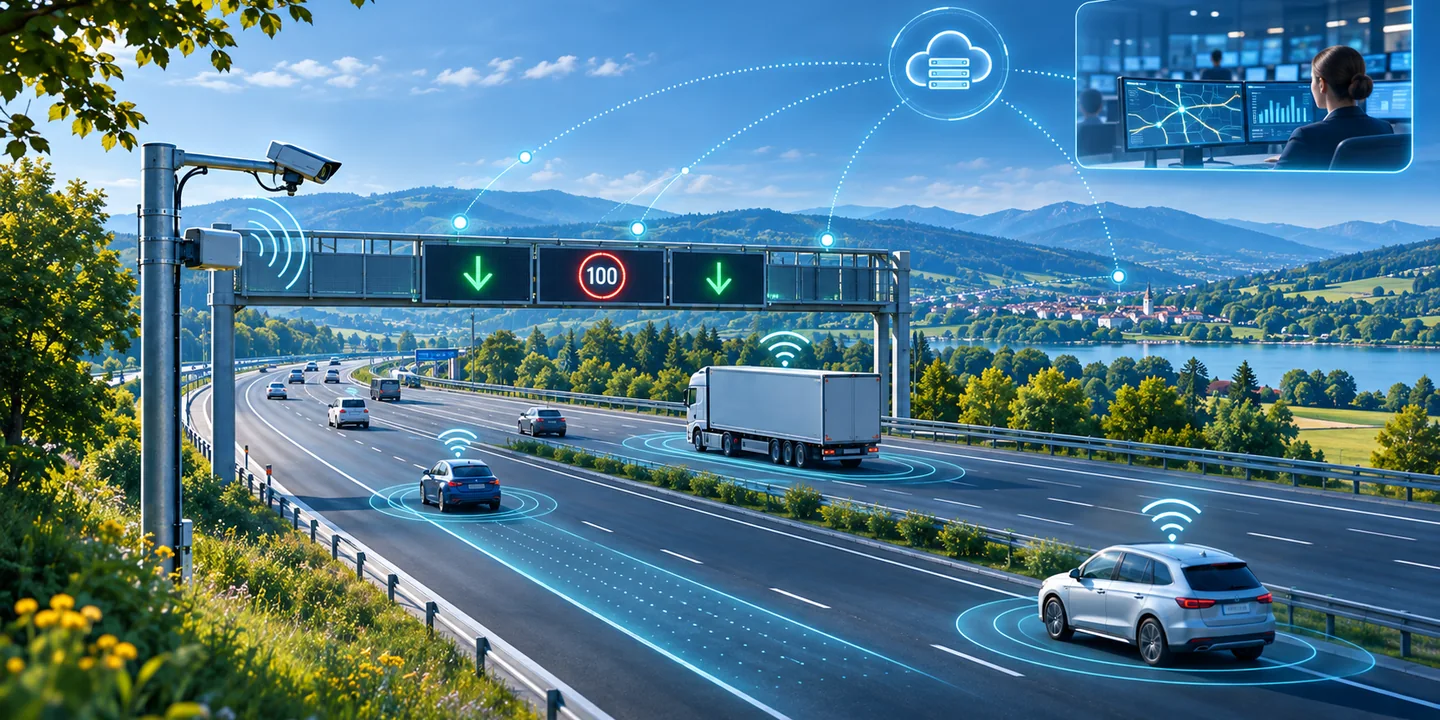
Road operators gather information through traffic detectors, cameras, weather systems, control centres and reports from vehicles or service providers. A single observation is not always enough: information needs to be checked, located accurately and connected with the section of road affected.
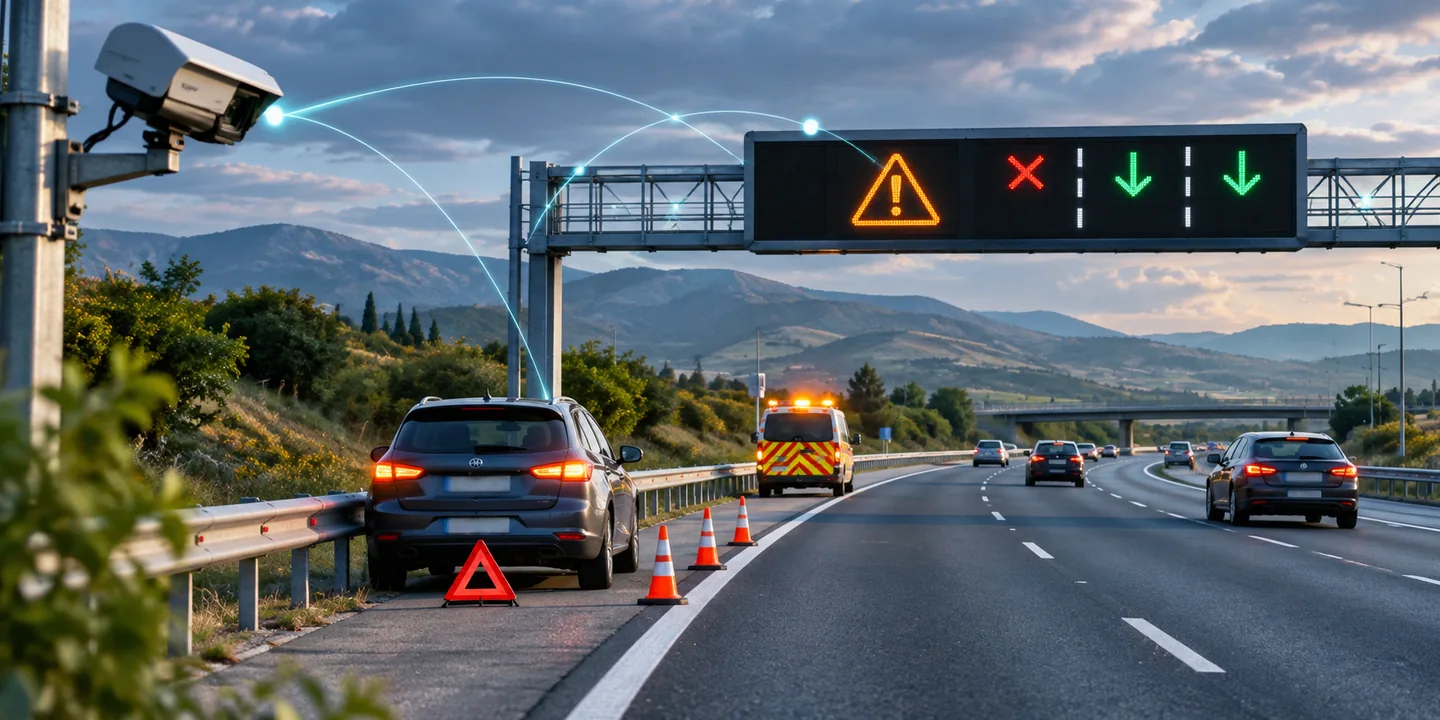
Once a disruption is confirmed, the result can reach travellers through roadside variable-message signs, navigation systems, traffic radio and mobile services. The important step is not merely collecting data, but delivering information while it is still relevant. A warning about a lane closure is useful before the driver reaches the affected junction, not after.

Different information for different decisions
Congestion levels, travel-time estimates and expected delays help people choose when to depart or which route to use. Weather warnings, incidents, roadworks and temporary restrictions can be more urgent because they influence safety as well as journey time.
These services also support road operators. When information is shared between neighbouring control centres, diversion plans and public warnings can be coordinated rather than issued independently at each administrative border. For freight operators, a reliable picture of corridor conditions helps with scheduling, delivery windows and rest planning.
Continuity beyond national boundaries
European road corridors create a special challenge: the underlying information may come from different authorities using different systems. Drivers should not lose essential traffic information simply because their journey continues into another country. Common descriptions of incidents, compatible data structures and clear responsibilities for updates all help services maintain continuity.
The European framework for safety-related and real-time traffic information addresses this coordination. Commission Delegated Regulation (EU) 2022/670 provides specifications for EU-wide real-time traffic information services, including access to and re-use of relevant road and traffic data.
Quality is as important as speed
Traffic data can quickly become misleading when an incident is cleared, a roadwork schedule changes or a disruption has been reported more than once. Useful traveller information therefore depends on the freshness, location, completeness and consistency of updates. Where uncertainty remains, services should avoid presenting an estimate as a confirmed fact.
This combination of data quality, practical communication and cooperation is central to the ITS approach introduced in the Intelligent Transport Systems overview. For a related technical perspective, see how road data can be exchanged between organisations and across borders.