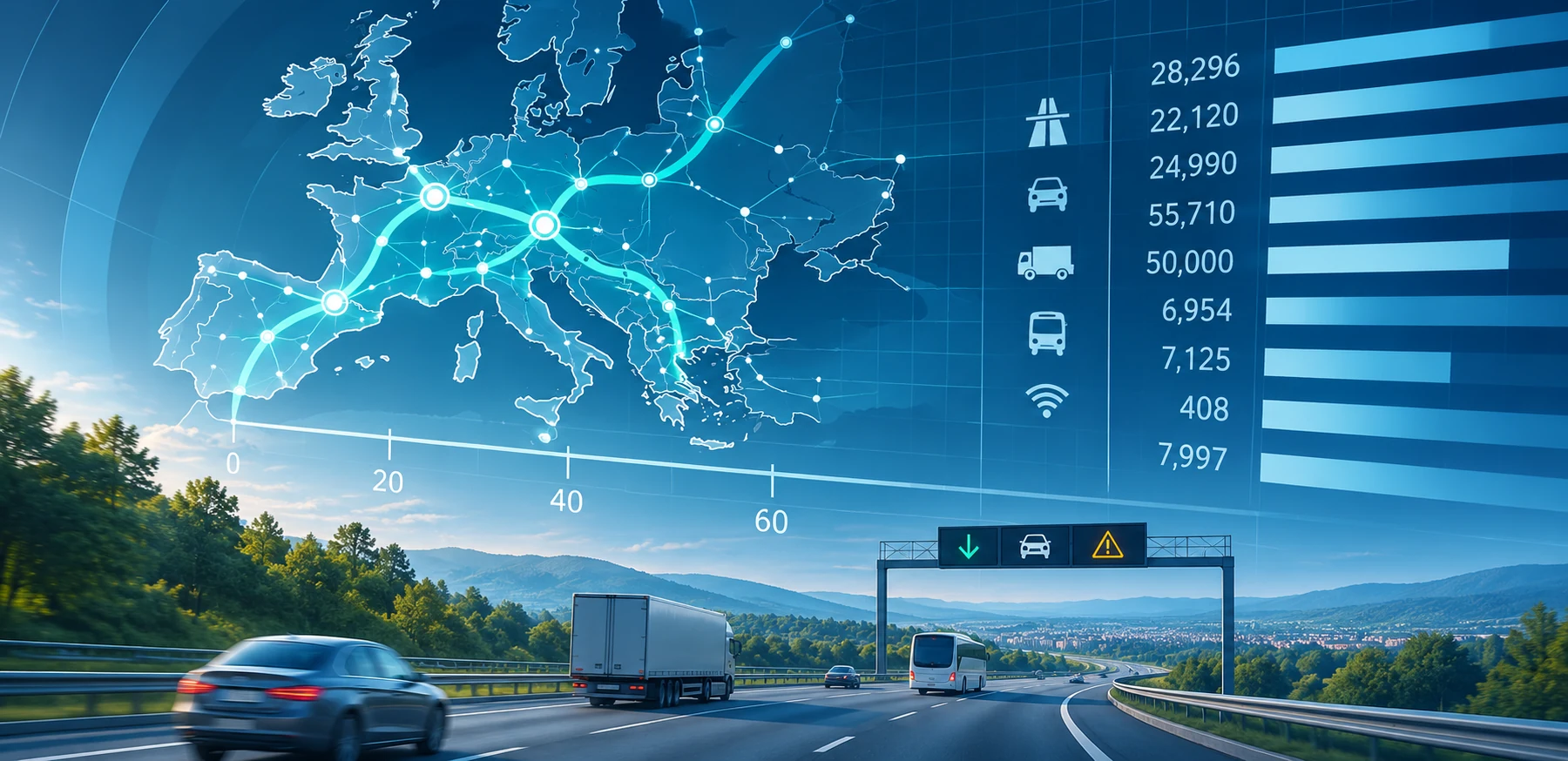
European road corridors serve both strategic and everyday mobility. Their long-term value depends on safety, continuity, resilience and the ability to support more sustainable patterns of transport.
Why corridors matter
European road corridors carry tourism, daily commuting and long-distance freight at the same time. Their performance therefore depends not only on pavement quality or capacity, but on how well infrastructure, information services and operational planning work together over long distances.
A corridor can be considered sustainable when it supports reliable travel while also limiting avoidable emissions, unnecessary delays and repeated disruption. That means smoother traffic flow, better incident response, clear information for travellers and a gradual integration of cleaner technologies such as low-emission fleets, electrification and energy-aware traffic management.
Reliability and resilience
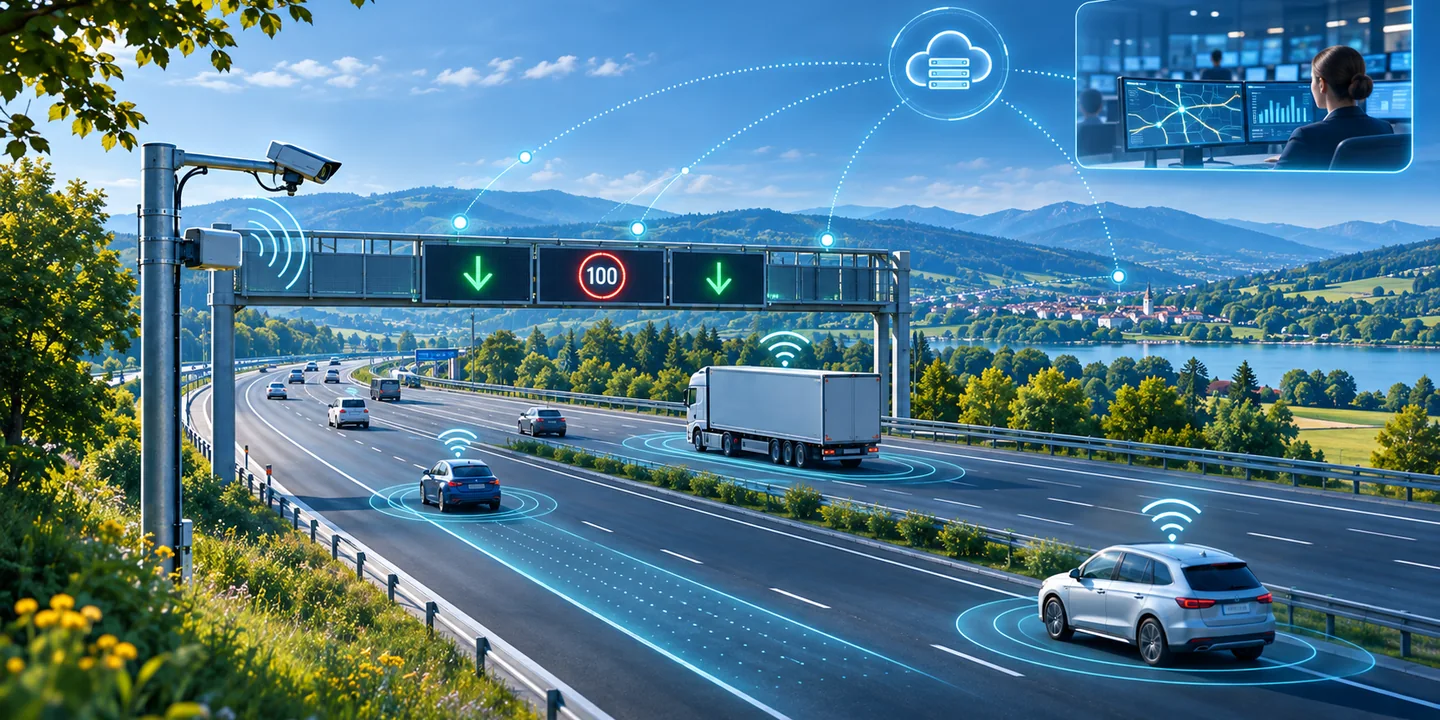
Resilient corridors are designed to keep functioning when conditions become difficult. Severe weather, roadworks, incidents or seasonal traffic peaks can all affect performance. Intelligent transport systems help operators detect pressure points early, adjust lane or speed management, coordinate diversions and communicate expected impacts to road users.
Resilience also has an organisational dimension. Road authorities, police, concessionaires and service providers often need to act together. Shared procedures and compatible information reduce the risk that a disruption escalates simply because the response is fragmented.
Environmental and operational goals
More predictable driving conditions reduce stop-and-go traffic, unnecessary idling and the secondary congestion that often follows poorly managed incidents. When traffic information is combined with demand management, access policies and multimodal alternatives, corridors can support wider environmental objectives without losing their strategic mobility role.
Data from sensors, connected services and control centres also helps authorities assess where interventions are most useful: safety upgrades, better signing, rest-area improvements, charging infrastructure or targeted operational measures. In that sense, sustainability is not separate from ITS; it is one of the outcomes that better information and coordination can support.
From strategic routes to better journeys
Many of the same principles appear in the broader Trans-European Networks discussion: continuity, interoperability and service quality along major routes. For a closer look at live operational support, see the article on real-time traffic and traveller information.