
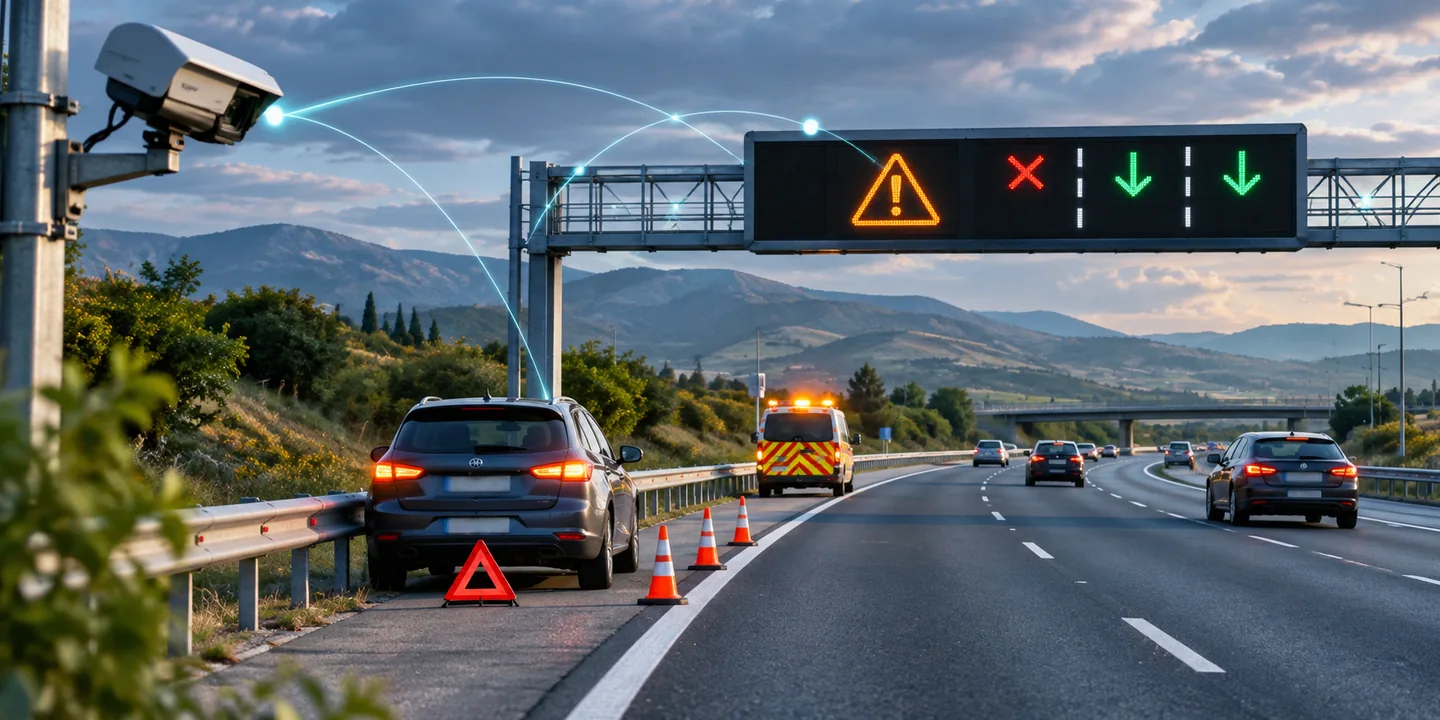
Road safety is not only a matter of infrastructure design or vehicle technology. It also depends on how rapidly risks are detected, how clearly people are warned and how effectively operators respond when normal traffic conditions change.
Recognising changing conditions
An unexpected queue near a tunnel, a vehicle stopped in a live lane or sudden low visibility can create danger before an accident occurs. Traffic management centres can use detectors, roadside equipment, camera observations and incident reports to identify such situations. The value of these technologies grows when they are connected to established response procedures.
Not every alert has the same urgency. A planned lane closure may be announced in advance, while an obstruction after a collision requires prompt verification, a clear message and often close cooperation with emergency services. Road operators must balance rapid action with the risk of publishing incomplete or misleading information.
What intelligent traffic management contributes
Variable-message signs, speed management, lane-control signals and navigation alerts help road users anticipate hazards. When a severe incident blocks a strategic road, an operator may need to coordinate access for emergency vehicles, protect responders and manage traffic further upstream. Early notice gives approaching drivers more time to adapt.
Incident management is therefore a chain of connected tasks: detection, assessment, warning, operational response and confirmation that normal conditions have returned. The process can be supported by technology, but it also depends on training and communication between road authorities, emergency teams and information providers.
European services and safety-related warnings
For international routes, safety messages should retain their meaning when data moves between organisations. The EU established specifications for road safety-related minimum universal traffic information under Commission Delegated Regulation (EU) No 886/2013. The framework is designed to support compatibility, interoperability and continuity of relevant safety information, where possible free of charge to users.
This does not mean that every hazard is instantly detected or that services can replace driver attention. Coverage, observation quality and response capability differ by road and location. Nevertheless, common practices can help essential warnings travel further and become more useful.
A corridor-wide view
Many journeys involve motorways, urban approaches, ports and border crossings. An incident in one section may cause congestion elsewhere, so operational cooperation should extend beyond the immediate event. The European Road Networks material explains the infrastructure context, while the article on real-time traveller information looks at how timely messages reach road users.